techpeople
Education • Gaming • Science & Tech
Automotive Electrical Diagnostics: The Complete Guide for Truck and SUV Owners in Hayward, CA
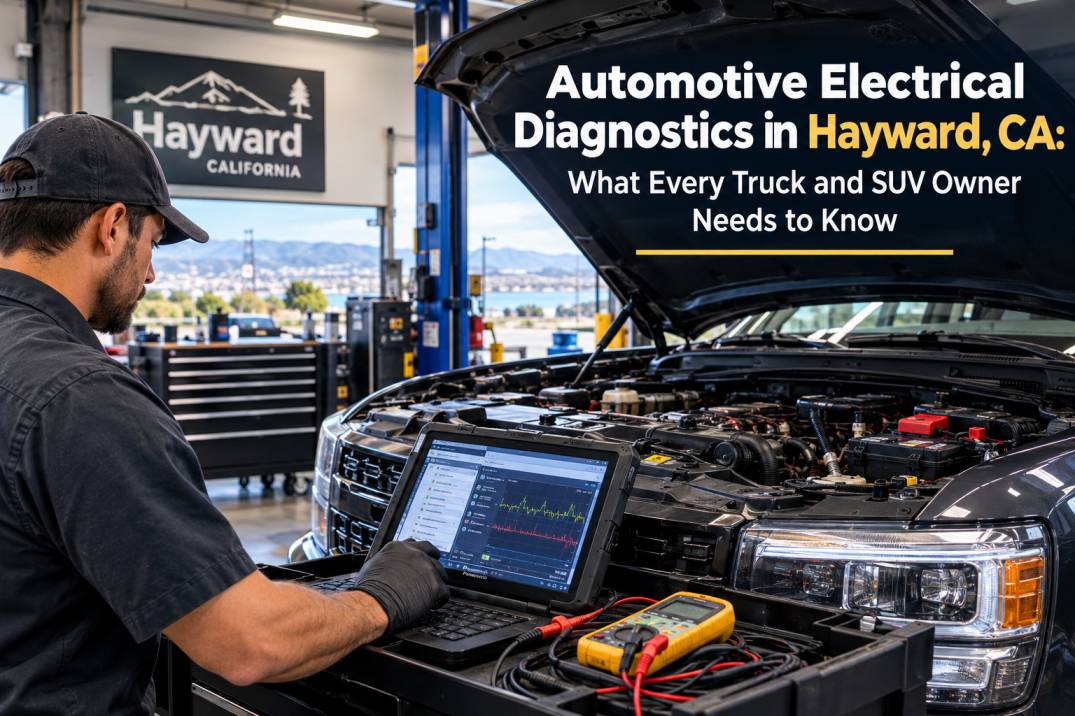
Automotive Electrical Diagnostics in Hayward, CA: What Every Truck and SUV Owner Needs to Know
October 15, 2026
post photo preview

Your check engine light has been on for five days. Your power windows respond slower than they should. Your audio system cuts out randomly at highway speed, and your truck takes a beat longer to start than it used to. None of these problems have sidelined you yet, but every single one of them is a signal that something inside your vehicle’s electrical system is not working correctly. For truck and SUV owners in Hayward, CA, ignoring these warning signs rarely ends well. Professional automotive electrical diagnostics is the process that identifies exactly what is wrong, where the fault is occurring, and why, before a manageable issue becomes a breakdown on the side of the road or a repair bill that proper diagnosis could have prevented entirely. Modern vehicles are built around complex electrical architectures where every system communicates with every other system through shared networks of wiring, sensors, and control modules. Chasing an electrical fault without professional diagnostic tools and genuine hands-on experience wastes time, misses the real problem, and frequently results in replacing parts that never needed replacing.

What Professional Automotive Electrical Diagnostics Actually Involves

Many drivers assume that automotive electrical diagnostics means plugging a code reader into the OBD port under the dashboard and reading whatever numbers come up on the screen. That step is where a professional diagnostic process begins, not where it ends. A thorough evaluation works through your vehicle’s electrical systems layer by layer, using specialized equipment and trained interpretation to identify faults that a visual inspection or a basic consumer-grade scanner will never surface. Understanding what the full process covers helps explain why professional diagnostics consistently produces results that guesswork and parts-swapping cannot.

OBD Scanning and Code Interpretation

Every vehicle built after 1996 stores fault codes in its onboard diagnostic system that record when a sensor reading, circuit condition, or system behavior falls outside the parameters the manufacturer defined. Reading those codes is the starting point, but experienced technicians treat them as leads rather than final answers. A code pointing to a mass airflow sensor fault might indicate a failing sensor, a wiring fault in the sensor circuit, an intake leak affecting the sensor’s readings, or a software issue inside the engine control module. Following the code to its actual root cause requires circuit testing and system evaluation beyond the code itself, and that deeper process is where professional automotive electrical diagnostics separates itself from basic code reading available at any auto parts store.

Voltage, Resistance, and Circuit Testing

Every electrical circuit in your vehicle operates within specific voltage, resistance, and current parameters that define correct function. Testing circuits against those parameters using a digital multimeter, a lab scope, or a current clamp identifies exactly where a circuit deviates from specification and why. A circuit with excessive resistance due to a corroded connector delivers less voltage to its connected component than it should, causing that component to underperform or behave erratically. A circuit with an intermittent open connection causes the component it feeds to cut out unpredictably, producing symptoms that are frustratingly difficult to reproduce consistently during a basic visual inspection. Systematic circuit testing finds these faults with a precision that no amount of visual examination can replicate.

The Most Common Automotive Electrical Diagnostics Findings in Trucks and SUVs

Certain electrical problems appear more frequently in trucks and SUVs than in standard passenger vehicles, partly because of how these vehicles are driven and partly because of the additional electrical loads that aftermarket accessories and overlanding builds place on factory systems over time. Recognizing the most common fault categories helps you identify developing problems early and get professional attention before they escalate into more serious failures.

Battery and Charging System Faults

A battery losing capacity and a charging system failing to maintain correct voltage are among the most common findings in automotive electrical diagnostics work on high-mileage trucks and SUVs. When battery voltage drops below the threshold that control modules require to operate correctly, the vehicle begins producing a wide range of seemingly unrelated symptoms. Warning lights illuminate for systems that are functioning normally, infotainment systems reset without warning, and transmission shift behavior changes because the transmission control module is not receiving stable supply voltage. A thorough battery and charging system evaluation that measures cold cranking amps, battery state of health, alternator output, and voltage drop across the charging circuit identifies these problems accurately and resolves confusion that parts-swapping never clears up.

Ground Connection Degradation

Ground connections are the return path for every electrical circuit in your vehicle, and degraded grounds are one of the most common and most frequently overlooked sources of difficult electrical faults. A ground connection that has developed resistance through corrosion, paint contamination, or physical loosening affects every circuit that shares that ground path. The symptoms appear across multiple unrelated systems and rarely point obviously toward a grounding issue, making this category of fault particularly difficult to diagnose without a systematic approach. Vehicles in the Bay Area that experience regular exposure to coastal moisture and temperature cycling are especially susceptible to ground connection degradation over time, and a comprehensive ground inspection belongs in every automotive electrical diagnostics process performed on a Bay Area truck or SUV.

Aftermarket Accessory Integration Conflicts

Every aftermarket accessory added to a vehicle introduces additional wiring, additional load on the electrical system, and new opportunities for installation errors that create conflicts with factory systems. A remote start system wired incorrectly can trigger persistent security system faults. A dash cam tapped into the wrong fuse circuit can cause other accessories sharing that circuit to lose power intermittently. An audio amplifier with a poor ground connection can introduce noise into multiple vehicle systems that share the same ground path. Professional automotive electrical diagnostics that evaluates aftermarket installation quality alongside factory system function identifies these conflicts accurately, which is why drivers who have had multiple aftermarket installations performed over the years benefit most from a comprehensive diagnostic evaluation.

Automotive Electrical Diagnostics for Overlanding Builds: Why It Matters Before You Build

For overlanders planning a serious vehicle build, professional automotive electrical diagnostics before installation begins is one of the most valuable investments in the entire project. Adding a dual battery system, solar charging setup, high-output lighting array, portable power station, and security system to a vehicle with pre-existing electrical weaknesses creates a build that underperforms from day one and produces layered faults that are difficult to untangle after the fact because new installations and pre-existing problems overlap in confusing ways.

Establishing Your Electrical Baseline

A pre-build diagnostic evaluation establishes the current health of your vehicle’s battery, charging system, wiring, and ground connections before any new components are added. If the alternator is showing early signs of overload stress, addressing it before adding a high-draw audio amplifier and auxiliary battery system prevents a premature failure that would otherwise occur on a remote trail with no support nearby. If the factory wiring shows signs of heat damage or insulation degradation, addressing it before routing new circuits through the same channels prevents future faults that would be extremely difficult to isolate after the build is complete and multiple new circuits have been added.

How Audio Mobile Hayward Integrates Diagnostics Into Every Build

The team at Audio Mobile Hayward on Mission Boulevard in Hayward, California treats automotive electrical diagnostics as a foundational part of every overlanding build consultation rather than a separate service that only applies when something is already broken. Before recommending specific components or planning installation sequences, their technicians assess the vehicle’s electrical condition to ensure the build is planned around a foundation that can genuinely support it. This approach consistently produces builds that perform reliably from the first trip rather than requiring troubleshooting and corrections after installation is complete. Drivers across the East Bay who have worked with the shop on complex builds consistently point to this diagnostic-first approach as the reason their installations work correctly from day one and continue working correctly on every trip after that.

Why Hayward and Bay Area Drivers Trust Audio Mobile Hayward for Automotive Electrical Diagnostics

Across Hayward, Fremont, Oakland, San Leandro, Union City, and the broader East Bay, truck and SUV owners dealing with electrical problems have found that working with a specialist who combines genuine diagnostic depth with extensive hands-on experience across aftermarket installations produces faster and more accurate results than a general repair shop. Automotive electrical diagnostics at Audio Mobile Hayward reflects years of working with complex vehicle electrical systems across car audio, vehicle security, GPS tracking, remote start, window tinting, and full overlanding builds, giving their diagnostic team a perspective on vehicle electrical problems that a standard repair shop simply cannot replicate. Their location at 24031 Mission Boulevard puts them at the center of the East Bay vehicle enthusiast community, and their reputation for accurate, efficient diagnosis has made them the first call for drivers across the region when electrical problems resist simple solutions. For Bay Area truck and SUV owners who need diagnostics backed by real expertise, reviewing the complete range of automotive electrical diagnostic and installation services available at Audio Mobile Hayward is the right starting point for getting accurate answers and repairs done correctly the first time.

Protecting Your Vehicle Starts With Knowing What Is Wrong

Professional automotive electrical diagnostics gives truck and SUV owners in Hayward and across the Bay Area the accurate, efficient path to resolving electrical problems that guesswork and parts-swapping consistently fail to deliver. From OBD scanning and circuit testing to ground inspection, charging system evaluation, and aftermarket installation conflict resolution, a thorough diagnostic process identifies the real source of every electrical symptom and guides the right repair the first time. For overlanders planning a build, pre-build diagnostics protects every dollar invested in accessories by ensuring the electrical foundation is solid before the first component goes in. If you are in Hayward or anywhere across the East Bay and dealing with an electrical problem you cannot resolve, Audio Mobile Hayward has the diagnostic tools, the technical depth, and the hands-on experience to find the answer and fix it right. Reach out today and get your vehicle’s electrical system working exactly the way it should.


community logo
Join the techpeople Community
To read more articles like this, sign up and join my community today
0
What else you may like…
Articles
post photo preview
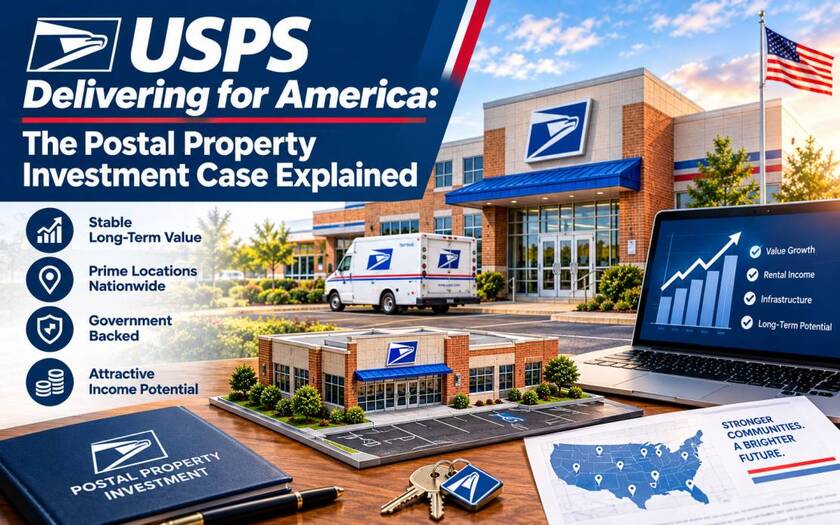
USPS Delivering for America: The Postal Property Investment Case Explained
USPS Delivering for America is transforming how the postal service operates. Here is what real estate investors need to know about this government-backed shift.

USPS Delivering for America has become one of the most consequential policy developments for income-focused real estate investors in recent years, yet most allocators have not fully examined what it means for their portfolios. At its core, USPS Delivering for America is a decade-long commitment by the federal postal service to modernize its facilities, expand its processing infrastructure, and restructure its delivery network to meet the demands of a parcel-driven economy. For real estate investors who understand that government capital commitments translate directly into property market signals, this agenda represents something worth studying carefully before the broader market catches up.

The investment case for USPS-leased real estate has historically rested on the credit quality of the federal tenant and the essential-service character of mail and parcel delivery. USPS Delivering for America adds a third dimension to that thesis: a publicly documented, forward-looking commitment to the physical infrastructure that underpins the entire asset class. Investors who have not yet incorporated this context into their underwriting process are evaluating postal properties with less than the full picture available to them.

Why Postal Properties Have Moved From a Niche to a Recognized Investment Category

The commercial real estate market has experienced meaningful rotation over the past several years, and income-focused capital has responded by moving toward assets with more defensible cash flow characteristics. Office vacancies remain structurally elevated in major metropolitan markets. Retail real estate continues absorbing the long-term consequences of shifting consumer behavior. Industrial assets, which attracted substantial institutional interest over the prior decade, have seen cap rate compression that has reduced their attractiveness for new capital deployment. In that environment, net-lease assets anchored by creditworthy, operationally stable government tenants have drawn sustained and growing attention from allocators who prioritize income durability.

USPS-leased facilities occupy a specific and well-defined position within that broader trend. The postal service operates under a federal mandate to deliver mail and packages to every address in the United States, a statutory obligation that does not respond to economic cycles, consumer sentiment shifts, or corporate earnings pressures the way private-sector tenant demand does. For investors who build portfolios around tenant credit quality as a primary underwriting variable, that statutory foundation carries practical weight that most other net-lease categories cannot replicate.

The growing visibility of this sector among institutional allocators has also improved the quality of information available to investors. Dedicated research, published transaction data, and exchange-listed vehicles with standardized financial reporting have collectively raised the level of transparency in a market that was once dominated by fragmented private ownership and inconsistent pricing benchmarks. That maturation has made postal properties more accessible and more legible for a broader range of sophisticated capital.

The Structural Characteristics That Make USPS-Leased Real Estate a Distinct Income Asset

Several features separate postal properties from conventional net-lease investments in ways that matter significantly to the underwriting process. The federal tenancy is the most fundamental distinction. The USPS does not carry private-sector balance sheet risk, and its operational continuity is backed by statute rather than corporate performance. That credit foundation is not replicated by most commercial tenants, even those with investment-grade ratings from major credit agencies, because statutory obligations exist independently of financial market conditions in a way that corporate covenants do not.

Last-mile delivery facilities represent the most operationally critical subset within the postal property category. These buildings are the physical endpoints of the domestic mail and parcel network, the locations where sorted deliveries transition into individual routes serving homes and businesses. As domestic parcel volumes have expanded alongside e-commerce growth, the logistical importance of these facilities has deepened. The growth of online retail has made last-mile postal infrastructure more central to the domestic supply chain rather than less, which provides a functional argument for long-term occupancy that reinforces the contractual protections within any individual lease.

Lease structures in this segment also tend to include renewal options and periodic rent escalations that extend income visibility beyond a single lease term. For institutional investors building yield-oriented portfolios with multi-year cash flow modeling requirements, that predictability is a structural advantage that many other real estate categories cannot offer with equivalent consistency. Taken together, the tenant profile, facility function, and lease design create an income asset that warrants serious consideration from any allocation framework built around stability and government-backed cash flow.

How the USPS Delivering for America Plan Provides a Framework for Smarter Underwriting

The actionable value of the usps delivering for america plan for real estate investors is not abstract. It provides a publicly available, government-authored document that speaks directly to which facility types the postal service is investing in, which operational functions it is expanding, and how its physical network is expected to evolve over the next decade. For investors evaluating specific postal property acquisitions, that level of detail creates a framework for distinguishing between assets with strong long-term occupancy characteristics and those that carry more meaningful renewal uncertainty.

Processing and distribution facilities aligned with expanded parcel handling capacity are among the facility types most directly supported by the investment priorities outlined in the usps delivering for america plan. Last-mile delivery offices serving high-volume population corridors represent another category where the modernization framework reinforces occupancy intent in ways that historical lease data alone cannot fully capture. Investors who apply this framework to specific acquisition targets are engaging in a more rigorous form of asset-level analysis than generic government tenancy arguments support on their own.

The inverse application of this framework is equally useful. Facilities that fall outside the operational priorities of the modernization agenda carry a different occupancy risk profile than those at its center. Investors who read the usps delivering for america plan as an active research tool rather than passive background context are doing the kind of granular underwriting that separates disciplined participants in this niche from those who are relying solely on the federal tenant label without understanding the facility-level distinctions that determine long-term income durability.

Postal Realty Trust and the Case for Exchange-Listed Exposure to This Thesis

For investors seeking transparent, liquid access to USPS-leased real estate, Postal Realty Trust (NYSE: PSTL) is the only publicly traded REIT built exclusively around this asset category. Established in May 2019,Postal Realty Trust has assembled a national portfolio of postal facilities spanning last-mile delivery offices, mail processing centers, and dedicated postal properties across all 50 states, with an acquisition strategy informed by deep institutional expertise in USPS lease structures and the facility-level implications of the federal modernization agenda.

The exchange-listed structure provides investors with liquidity and institutional-grade disclosure that direct postal property ownership cannot offer. Quarterly financial results are filed with the SEC, dividend history and tax information are publicly reported, and analyst coverage is available through the company’s investor relations platform. For financial advisors and institutional allocators evaluating alternative income allocations, that transparency significantly lowers the due diligence burden compared to assessing privately held postal property portfolios without standardized reporting infrastructure.

The sector purity of the vehicle is also a meaningful consideration for investors who want a clean, legible thesis without the dilution that comes from a diversified net-lease portfolio where postal properties represent a minor allocation. That clarity has practical value in portfolio construction conversations and in client communication contexts where the rationale for an allocation needs to stand on its own without qualification or complexity.

Risk Factors That Must Be Part of Every Serious Evaluation

A credible investment thesis requires a transparent accounting of where the genuine risks reside, and the postal property category carries several that investors should weigh carefully. The USPS retains statutory termination rights on its leases under certain conditions, a provision that differs materially from standard commercial net-lease termination language. Investors who assign terminal values to postal assets without reading the specific termination provisions in the applicable lease documents are accepting risk they have not fully priced, regardless of how compelling the broader federal tenant argument appears.

The long-term financial condition of the USPS also warrants ongoing monitoring. Legacy obligations related to retiree health benefit pre-funding have weighed on the agency’s balance sheet for many years, and while legislative reform has addressed portions of that burden, the agency’s financial profile remains a variable that long-term investors should track actively rather than assume away. The Delivering for America modernization agenda includes financial sustainability components, but multi-year institutional programs of this scale and complexity carry execution risk that responsible investors should incorporate into their analysis.

Portfolio concentration is a structural consideration as well. A real estate allocation anchored entirely to one federal tenant does not provide the diversification that broader commercial real estate allocations offer, regardless of that tenant’s credit quality. Postal properties are most appropriately sized as a yield-enhancing component within a diversified income strategy rather than as a primary or standalone position.

What Investors Who Take USPS Delivering for America Seriously Should Do Next

USPS Delivering for America has given the postal property investment thesis something that no amount of historical lease performance data could provide on its own: a forward-looking, government-authored commitment to the physical infrastructure that underlies the entire asset class. For income-focused investors who have been evaluating this sector from a distance, that commitment provides a concrete and publicly documented basis for engagement that is more durable than any single lease renewal or quarterly earnings report.

The structural qualities of USPS-leased real estate, including federal tenancy, essential-service mandate, long-term lease income visibility, and formal modernization backing, combine to form a thesis that is both coherent and grounded in verifiable government policy. The risks are real and must be underwritten with rigor. For allocators building portfolios around durable, government-supported income, however, USPS Delivering for America has made the case for this asset class more actionable than it has ever been before.

Investors who want to examine the full scope of this thesis, including strategic documentation, portfolio details, quarterly financial data, and analyst perspectives, can begin their research at postalrealtytrust

Read full Article
post photo preview
Trademark Enforcement: Adams Law Office Defends Your Brand Against Infringement
Why Proactive Trademark Enforcement Is the Difference Between a Protected Brand and a Vulnerable One

Securing a federal trademark registration is a foundational achievement for any business committed to protecting its brand identity, but the registration itself is only as powerful as the Trademark Enforcement strategy that stands behind it. Trademark Enforcement is the active, ongoing practice of identifying unauthorized uses of a registered mark, evaluating the legal and commercial significance of each potential infringement, and taking the appropriate legal action to stop unauthorized use before it causes lasting damage to the brand’s market position and consumer recognition. For entrepreneurs, startups, and established California businesses that have invested real time and capital in building a recognizable brand, a trademark registration without a corresponding enforcement commitment is a legal asset that cannot fully protect itself. Adams Law Office works with California businesses to build and execute trademark enforcement strategies that are proportionate to the threat, grounded in legal precedent, and designed to protect the long-term commercial value of the brand.

Why Trademark Enforcement Has Become a Business-Critical Function

The expansion of digital commerce, social media marketing, and global supply chains has created an enforcement environment that is fundamentally different from what it was a generation ago. A brand that operates successfully in one market today can find its name, logo, or tagline replicated by a competitor in another market almost immediately, and the mechanisms through which infringing uses reach consumers, including e-commerce platforms, social media channels, and domain name registrations, are numerous and constantly evolving.

The USPTO does not proactively monitor the marketplace on behalf of registered trademark owners. The responsibility for identifying infringing uses and taking action to stop them rests entirely with the rights holder, and courts have consistently held that a trademark owner who fails to police their mark over time may weaken the legal strength of that mark in subsequent enforcement proceedings. Consistent Trademark Enforcement is not simply a defensive measure; it is a legal obligation that preserves the distinctiveness and enforceability of the registered mark over the long term.

The volume of trademark applications filed each year also creates ongoing exposure for registered mark owners. New applications that closely resemble an existing registered mark enter the USPTO’s publication queue regularly, and the 30-day opposition window that the USPTO provides for challenging conflicting applications passes quickly. A trademark owner without an active monitoring and enforcement program in place may miss the opportunity to oppose a conflicting application during that window, allowing a potentially damaging mark to achieve registration and gain legal standing in the marketplace.

Why California Trademark Owners Need Enforcement Counsel With Local and Federal Expertise

California’s position as one of the world’s most active commercial markets creates both elevated brand value and elevated infringement risk for businesses operating in the state. The concentration of technology companies, consumer goods brands, entertainment industry operators, and professional services firms in California means that brand conflicts arise frequently and that the commercial stakes attached to those conflicts are often significant. A trademark owner in this environment needs enforcement counsel who understands both the federal legal framework governing trademark rights and the specific commercial dynamics of the California market.

Federal trademark rights are enforced through a range of legal mechanisms that operate at different levels of cost and formality, from a carefully drafted cease-and-desist letter at one end to federal district court litigation at the other. Between these endpoints lie USPTO opposition and cancellation proceedings before the Trademark Trial and Appeal Board, negotiated coexistence agreements, and platform-based complaint procedures available through major e-commerce and social media operators. A trademark attorney California enforcement clients work with understands how to evaluate a specific infringement scenario and select the response mechanism that is most likely to resolve the conflict efficiently without unnecessarily escalating the legal proceedings.

California’s own unfair competition statutes, particularly those codified under the California Business and Professions Code, provide additional enforcement tools that can complement federal trademark rights in certain infringement scenarios. An attorney with deep familiarity in both federal trademark law and California state IP law can identify when state law remedies provide meaningful additional leverage in an enforcement matter, giving California trademark owners a broader range of legal options than federal law alone would provide.

Understanding Trademark Office Action Response as Part of a Broader Enforcement Strategy

Trademark enforcement does not begin only after an infringement has occurred in the marketplace. A proactive enforcement program includes monitoring the USPTO’s application database for conflicting marks and filing Trademark Office Action Response submissions when a conflicting application receives an office action that the applicant attempts to overcome. Participating in the opposition process by filing a Notice of Opposition during the publication period is another enforcement tool that stops a conflicting mark from achieving registration before it gains legal standing that makes it more difficult and expensive to challenge.

A well-structured Trademark Office Action Response filed on behalf of an opposing party can be an effective early-stage enforcement action that resolves a conflict at the administrative level without the cost and time associated with federal court litigation. Adams Law Office monitors published applications on behalf of clients and evaluates each potential conflict to determine whether an opposition or a watch-and-monitor approach is the more appropriate response given the specific marks involved and the commercial context of the potential conflict.

Enforcement strategy also extends to the maintenance of the trademark registration itself. A registered mark that lapses due to missed maintenance filings loses its legal presumptions and becomes vulnerable to cancellation proceedings initiated by third parties. Maintaining the registration in active, current status is a prerequisite for any enforcement action, and a trademark owner whose registration has lapsed has significantly diminished legal standing in any infringement dispute that arises after the cancellation.

How Adams Law Office Structures Trademark Enforcement for California Business Owners

Effective Trademark Enforcement requires a structured, attorney-guided process that begins with monitoring, moves through evaluation, and proceeds to action with a clear understanding of the legal and commercial objectives at each stage. Firms that handle trademark enforcement as an occasional service rather than a core practice area are limited in their ability to provide this kind of structured, sustained approach.

Adams Law Office is organized around the exclusive practice of trademark law, which means that attorney Sharon Adams brings focused, current expertise to every enforcement matter the firm handles. This concentration of practice enables the firm to maintain detailed awareness of USPTO proceedings, federal court developments, and platform-based enforcement procedures that affect how trademark rights are defended in the current commercial environment.

When a potential infringement is identified, Adams Law Office conducts a thorough evaluation of the infringing use, the strength of the client’s registered mark, the commercial impact of the infringement, and the most effective legal mechanism for addressing it. This evaluation informs the selection of the enforcement approach, whether that is a cease-and-desist letter, a USPTO opposition filing, a platform complaint, or a formal federal court action. The firm works with clients to understand the cost and timeline implications of each approach, enabling informed decisions about how aggressively to pursue each enforcement matter relative to its commercial significance.

The Risks of Passive Trademark Ownership Without Active Enforcement

A registered trademark that is never enforced gradually loses the practical value of the registration. Courts and the USPTO both recognize the concept of trademark abandonment through non-use and non-enforcement, and a rights holder who consistently fails to act against known infringers may find that their ability to assert those rights in a subsequent enforcement action is meaningfully diminished. The legal principle underlying this risk is straightforward: a trademark’s function is to identify the source of goods and services in the minds of consumers, and a mark that is freely used by multiple parties without objection from the rights holder ceases to perform that function reliably.

Beyond the legal implications of passive ownership, the commercial consequences of unaddressed infringement compound over time. An infringer who operates without challenge builds market presence, customer recognition, and potentially its own legal rights under a mark that should belong exclusively to the registered owner. The longer an infringement is allowed to continue, the more established the infringing use becomes and the more difficult and expensive it is to dislodge through legal proceedings.

Platform-based infringement, including counterfeit goods sold through major e-commerce marketplaces and unauthorized use of a brand’s name or logo on social media, carries reputational risks that extend beyond the direct commercial impact of lost sales. Consumers who purchase counterfeit goods believing them to be authentic associate the quality and experience of those goods with the legitimate brand, potentially damaging the brand’s reputation through an infringement the rights holder did not commit and cannot control without active enforcement action.

Protecting a Brand Requires Both Registration and Consistent Enforcement

A federal trademark registration establishes the legal foundation for brand protection, but Trademark Enforcement is what gives that foundation real commercial meaning. Without consistent enforcement, a registration is a legal document rather than a functioning brand protection tool, and the investment that went into securing it does not produce the commercial returns it is capable of delivering.

For California business owners who are ready to build a proactive enforcement program around their registered trademarks, or who have identified a specific infringement that requires immediate legal attention,Adams Law Office provides the focused trademark counsel that effective brand defense requires. Engaging enforcement counsel before an infringement becomes entrenched in the marketplace gives every business the strongest possible legal position and the widest range of strategic options for protecting the brand identity they have worked to build.

Read full Article
post photo preview
What Oakland Families Deserve to Know Before Hiring a Family Law Attorney in Oakland CA
Family Law Attorney Oakland CA: Your Essential Guide Now

Family law matters in Oakland carry real and lasting consequences. Whether you are navigating a divorce with complex financial considerations, fighting to protect your time with your children in a custody dispute, or working through a child support modification that no longer reflects your actual circumstances, the legal decisions made in the earliest stages of your case establish patterns that are difficult and expensive to reverse later. When Oakland residents begin searching for the right family law attorney Oakland CA offers, they quickly discover that not every attorney who handles family law cases brings the same depth of knowledge, financial sophistication, and genuine commitment to client outcomes. Moradi Neufer has helped Oakland and Bay Area clients navigate exactly these challenges with the focused California family law expertise and strategic precision that genuinely complex family law matters consistently require.

Why Family Law Cases in Oakland Demand More Than Basic Legal Knowledge

Oakland sits at the intersection of one of the most economically diverse and professionally varied regions in California. The city’s residents include technology professionals, healthcare workers, educators, small business owners, artists, and families who have built their financial lives here over decades, each with their own distinct set of legal and financial challenges when family law matters arise.

California’s community property framework treats most assets and debts accumulated during the marriage as jointly owned and subject to equal division upon divorce. Applying that principle to an Oakland marriage that involves technology company equity compensation, small business ownership interests, East Bay real estate that has appreciated significantly over the years, and retirement accounts accumulated across multiple employers requires careful legal and financial analysis that goes beyond what general legal practitioners typically provide.

Custody matters in Oakland carry their own distinct complexity. Parents with demanding work schedules in the technology and healthcare industries, children enrolled in specific schools or programs across different Oakland neighborhoods and surrounding cities, and co-parenting arrangements that need to function across varying work schedules and geographic areas all face unique practical and legal challenges when establishing workable custody arrangements. California courts evaluate every custody determination through the standard of the best interests of the child, and presenting a proposal that genuinely meets that standard in the context of an Oakland family requires attorneys who understand both California family law and the practical realities of their clients’ lives.

Financial disclosure compliance is a third area where Oakland family law cases demand real legal scrutiny. Both parties in a divorce proceeding are required by California law to provide complete and accurate financial disclosure of all assets, debts, income, and liabilities. When one spouse has primary control over the couple’s finances, the other may have an incomplete or inaccurate picture of what the marital estate actually contains. A skilled family lawyer Oakland clients rely on knows how to investigate thoroughly and ensure that the financial picture presented to the court is complete and accurate.

The Qualities That Define Outstanding Family Law Representation in Oakland

Understanding what genuinely separates strong family law representation from average legal service helps Oakland residents make this critical decision with greater clarity and more confidence in the outcome.

An exclusive family law focus. Family law attorneys who dedicate their entire professional practice to this area of law develop the procedural knowledge, financial analysis depth, and strategic instinct that generalists cannot replicate through occasional family law work. Every Oakland family law case they handle builds expertise that directly benefits the next client facing a similar situation.

Financial sophistication matched to the complexity of the case. The right family law attorney Oakland CA clients can genuinely rely on understands how to work effectively alongside forensic accountants and business valuators when a case demands this level of analysis. They know how to challenge financial disclosures that do not hold up to scrutiny and how to ensure that every significant asset in the marital estate is properly identified, characterized, and addressed in the final settlement or court order.

Strategic thinking over unnecessary conflict. Unnecessary conflict in family law proceedings drives up costs, extends timelines, and consistently produces worse outcomes, particularly in cases involving children. Outstanding representation means knowing when firm negotiation serves your interests better than extended litigation, when mediation is worth pursuing as a less adversarial and more cost-effective alternative, and when a contested hearing is genuinely the right path forward for your specific case.

Clear, honest communication throughout. The quality of an attorney’s communication in your first consultation is the most reliable predictor of what working with them across months of proceedings will actually feel like. Pay attention to whether they listen before speaking, explain complex legal and financial concepts in plain language, and give you an honest and realistic assessment of your situation rather than simply confirming your existing assumptions.

Transparent billing practices. Family law matters are already financially demanding. A trustworthy attorney explains their fee structure completely and honestly from the very first meeting, including retainer requirements, hourly rates, and a realistic estimate of total costs based on the specific facts and complexity of your case.

Protecting Your Children and Financial Future Through Oakland Family Law Proceedings

For Oakland parents, no dimension of a family law case carries more personal weight than the questions surrounding custody and the financial arrangements that will support their children going forward. California courts approach every custody determination through the lens of the child’s best interests, evaluating each parent’s existing relationship with the child, the stability and safety of each home environment, and each parent’s genuine capacity to meet the child’s physical and emotional needs.

California recognizes two separately addressed forms of custody. Legal custody covers decision-making authority over a child’s education, healthcare, and general upbringing. Physical custody determines where the child primarily lives day to day. Courts consistently favor arrangements that keep both parents actively and meaningfully involved in the child’s daily life, though every individual case is evaluated carefully based on its own specific facts.

Child support in California follows a statewide guideline formula that accounts for each parent’s gross income, the custody time-share arrangement, and certain allowable deductions. In Oakland, where income structures vary widely across industries and employment types, ensuring the figures used in the support calculation are accurate and complete requires careful legal and financial attention. An experienced family law attorney Oakland CA residents rely on ensures the final support order reflects your actual financial circumstances rather than an oversimplified approximation.

Both custody and support orders can be modified when circumstances change in ways that are meaningful and well-documented. A job change, a relocation, a significant shift in either parent’s income, or a change in the child’s educational or medical needs can all form the basis for a California modification request. Ongoing experienced legal guidance ensures your rights are protected not just at the time of the initial order but throughout the years that follow.

How Moradi Neufer Serves Oakland and Bay Area Families

Oakland families and individuals navigating divorce, custody disputes, child support matters, and broader family law issues have trusted Moradi Neufer for focused, experienced, and strategically sound legal representation. Serving clients throughout Oakland, San Francisco, Berkeley, San Mateo, Palo Alto, Los Angeles, Orange County, Newport Beach, Irvine, and communities statewide, the firm brings dedicated expertise in divorce, child custody, asset division, child support, and all areas of California family law to every case it handles.

The firm combines precise legal analysis with genuine personal attention to what each client is experiencing throughout the process. Whether your situation involves a high-conflict custody dispute, a financially complex divorce, a support modification, or a family law matter you want resolved efficiently and fairly, having attorneys whose entire practice centers on California family law provides a real and meaningful advantage at every stage.

Finding the Right Family Law Attorney Oakland CA Residents Trust: Take the First Step Today

Every week without experienced family law representation is a week during which important decisions may be made without the guidance needed to genuinely protect your interests and your children’s future. Early choices in a family law matter establish patterns and precedents that are costly and difficult to change once they are set.

The right family law attorney Oakland CA families rely on will listen carefully to every aspect of your situation, communicate with honesty and strategic clarity, and build a legal approach designed entirely around your specific goals. If you are facing a divorce, custody dispute, or any family law matter in California, consulting with an experienced California family law attorney is the most important step you can take right now. Reach out today and take the first step toward protecting your family, your finances, and your future with the right legal team beside you.

Read full Article
Available on mobile and TV devices
google store google store app store app store
google store google store app tv store app tv store amazon store amazon store roku store roku store
Powered by Locals