techpeople
Education • Gaming • Science & Tech
Trademark Licensing: How Adams Law Office Helps California Brands Grow While Staying Protected
Trademark Licensing: Adams Law Office Helps You Monetize Your Brand Legally
14 hours ago
post photo preview

A registered trademark is more than a legal shield against infringement; it is a commercial asset that can generate revenue, expand market reach, and build brand equity across new territories and product categories through a properly structured Trademark Licensing arrangement. Trademark Licensing is the legal mechanism through which a trademark owner grants another party the right to use a registered mark in connection with specific goods or services, under defined conditions, in exchange for compensation or other agreed consideration. For business owners in California and across the United States, this tool represents one of the most strategically powerful ways to leverage an established brand identity without the capital investment required for direct expansion. However, a trademark license that is not carefully drafted and consistently managed can expose the rights holder to serious legal risks, including the potential loss of the trademark registration itself. Adams Law Office works with California businesses to structure Trademark Licensing arrangements that protect the rights holder’s ownership, preserve the mark’s legal validity, and create the commercial framework necessary for a sustainable licensing relationship.

Why Trademark Licensing Has Become a Core Brand Strategy for Growing Businesses

The commercial potential of a well-established trademark extends well beyond the geographic markets or product categories in which the rights holder currently operates. A business that has built strong consumer recognition around a brand name or logo in one region or industry can leverage that recognition to enter adjacent markets through licensing arrangements that allow third parties to carry the brand into new territories or product lines. This approach to brand expansion reduces the capital requirements and operational complexity of direct expansion while generating licensing revenue that contributes to the rights holder’s financial performance.

Franchise models, co-branding arrangements, and distribution partnerships all frequently involve trademark licensing as a foundational legal component. When a franchisor grants a franchisee the right to operate under the franchisor’s brand, the underlying legal instrument is a trademark license that defines the terms of use, the quality standards the franchisee must maintain, and the conditions under which the license can be terminated. The same structure applies in co-branding arrangements where two established brands agree to associate their identities on a specific product or service offering.

The growth of e-commerce and digital product distribution has expanded the practical opportunities for trademark licensing among businesses of all sizes. A brand that has established recognition in a specific niche market can license its mark to manufacturers, distributors, or platform sellers who can carry the brand into market segments the rights holder lacks the infrastructure to reach independently. For startups and growing companies, this kind of licensing arrangement can generate meaningful revenue from a brand asset that would otherwise remain underleveraged during the early stages of business development.

What California Law Requires for a Legally Sound Trademark License

A trademark license that does not include the legal provisions required to protect the rights holder’s ownership of the underlying registration is not simply an imperfect commercial arrangement; it is a potential source of legal liability that can undermine the validity of the trademark registration itself. The most significant legal requirement for a valid trademark license under United States trademark law is the inclusion of quality control provisions that allow the rights holder to monitor and enforce the standards under which the mark is used by the licensee.

A trademark license that lacks adequate quality control provisions may be characterized as a naked license under trademark law, and a naked license is legally invalid. The consequence of a naked license is not merely an unenforceable contract between the parties; it is the potential abandonment of the trademark registration itself, on the grounds that the rights holder has allowed the mark to be used in commerce without maintaining the quality control that gives the mark its function as a source identifier. Courts have held that trademark owners who grant licenses without adequate control provisions can lose their trademark rights entirely, regardless of how long they have held the registration.

California businesses that enter into trademark licensing arrangements also need to consider the interaction between federal trademark law and California’s own commercial and contract law requirements. A trademark lawyer with experience in both federal IP law and California commercial transactions is positioned to draft licensing agreements that satisfy both sets of legal requirements without creating internal inconsistencies that could be exploited by a licensee in a subsequent dispute.

How Adams Law Office Structures Trademark Licensing Agreements for California Businesses

The drafting of a trademark license agreement requires attention to a range of legal provisions that go well beyond the basic commercial terms of the arrangement. The scope of the license, including the specific goods and services covered, the geographic territory in which the licensee is authorized to use the mark, and the duration of the license, must all be defined with sufficient precision to prevent disputes about the boundaries of the licensee’s authorized use. Quality control provisions must be substantive enough to satisfy the legal standard for a valid license while being practical enough for the rights holder to actually implement and enforce.

Adams Law Office approaches trademark licensing work with the same focused legal precision that characterizes the firm’s registration and enforcement practice. Attorney Sharon Adams works directly with each client to understand the commercial objectives of the proposed licensing arrangement and to structure the agreement in a way that achieves those objectives while protecting the client’s ownership of the underlying mark. This direct attorney involvement ensures that the license agreement reflects informed legal judgment about the specific risks and opportunities present in the client’s particular licensing scenario.

Adams Law Office also advises clients on the ongoing compliance obligations that a trademark license creates after the agreement is executed. Quality control monitoring, licensee performance evaluation, and the management of termination rights when a licensee fails to meet the required standards are all aspects of the licensing relationship that require active attention from the rights holder throughout the term of the agreement. A licensing arrangement that is executed with careful legal drafting but then left unmanaged creates the same naked license risk as one that was poorly drafted from the outset.

What Business Owners Should Evaluate Before Entering a Trademark Licensing Arrangement

The decision to license a trademark to a third party is a significant commercial and legal commitment that deserves careful evaluation before any agreement is signed. The rights holder needs to assess the licensee’s financial stability, operational capacity, and commitment to maintaining the quality standards that the license will require. A licensee who cannot or will not comply with the quality control provisions of the license agreement creates legal and reputational risks for the rights holder that can be more damaging than the lost licensing revenue from a failed arrangement.

A trademark lawyer experienced in licensing transactions will conduct a structured pre-licensing evaluation that identifies the key risks associated with a proposed licensee and recommends the contractual protections most appropriate for the specific arrangement. This evaluation should include an assessment of the licensee’s existing business practices, a review of any prior trademark or IP disputes involving the licensee, and a clear understanding of how the licensee intends to use the mark in commerce relative to the standards the rights holder wants to maintain.

The geographic scope and exclusivity terms of the license also require careful consideration before the agreement is finalized. An exclusive license that grants a single licensee the sole right to use the mark in a defined territory or product category can be a powerful commercial arrangement for the licensee, but it also limits the rights holder’s flexibility to enter that territory or category directly or through other licensing partners. Non-exclusive licenses preserve more flexibility for the rights holder but may be less attractive to licensees who are making significant investments in building market presence under the licensed mark.

The Legal and Commercial Risks of an Improperly Managed Trademark License

The risks associated with a poorly structured or inadequately managed trademark license are not hypothetical; they represent documented legal outcomes that trademark owners have experienced when licensing arrangements have been allowed to operate without appropriate legal oversight. The naked license doctrine, which holds that a trademark owner who fails to exercise quality control over a licensee’s use of the mark may lose the trademark registration, has been applied by courts in cases where the rights holder’s quality control provisions were found to be insufficient or were not actually implemented in practice.

Beyond the naked license risk, an improperly drafted license agreement can create ambiguity about the scope of the licensee’s authorized use that a court will resolve against the rights holder. A licensee who believes that their license covers a broader range of goods, territories, or activities than the rights holder intended can expand their use of the mark based on that interpretation, creating an infringement dispute between parties who were originally in a commercial relationship. Resolving these disputes through litigation is significantly more expensive than the legal investment required to draft a clear, precise license agreement from the outset.

Termination rights are another area where inadequate drafting creates serious practical problems. A rights holder who needs to terminate a license because the licensee has failed to meet quality standards, has breached other provisions of the agreement, or has allowed the licensed mark to become associated with products or services that damage the brand’s reputation needs clear, enforceable termination provisions to act decisively. A license agreement that does not include these provisions, or that makes termination procedurally difficult, leaves the rights holder without effective legal recourse when the licensing relationship deteriorates.

Trademark Licensing Done Right Builds Brand Value Instead of Undermining It

Trademark Licensing is one of the most commercially powerful tools available to a business that has built real equity in its brand identity, but its value depends entirely on the legal precision with which the licensing arrangement is structured and the consistency with which the rights holder’s quality control obligations are maintained throughout the license term. A well-managed licensing program expands a brand’s commercial reach, generates revenue from an existing asset, and builds the market presence that makes the underlying trademark registration more valuable over time.

For California business owners ready to explore the commercial potential of their registered trademarks through licensing, or for those who have already entered into licensing arrangements that need legal review and restructuring, Adams Law Office provides the focused trademark counsel that this specialized area of IP law requires. Engaging qualified legal guidance before a licensing arrangement is finalized gives every rights holder the strongest possible legal foundation for a commercial relationship that protects both the brand and the business that built it.


community logo
Join the techpeople Community
To read more articles like this, sign up and join my community today
0
What else you may like…
Articles
post photo preview
What Homeowners Must Know About Propane Gas Companies in Havertown
Boyle Energy | Propane Gas Companies in Havertown PA

When it comes to keeping a home comfortable and functional throughout every season in southeastern Pennsylvania, propane plays a critical role for thousands of homeowners across the region. Whether it powers a home heating system, a water heater, a cooking range, or a backup generator, propane is a versatile and efficient energy source that demands a reliable delivery and service partner. For Havertown residents evaluating their options, knowing how to identify the best Propane Gas Companies in Havertown is the first step toward securing consistent, safe, and cost-effective fuel service for the long term.

The challenge many homeowners face is that not all Propane Gas Companies in Havertown operate with the same standards of reliability, safety, or customer care. Some providers focus on volume at the expense of personalized service, leaving customers waiting too long for deliveries, struggling to reach someone when a problem arises, or receiving inconsistent pricing without clear explanation. These frustrations are avoidable, but only when homeowners know what to look for before they commit to a provider rather than after a bad experience has already occurred.

That is precisely why so many families across Havertown, Broomall, Swarthmore, Newtown Square, Radnor, and Springfield have trusted Boyle Energy as their preferred choice among Propane Gas Companies in Havertown for decades. Founded in 1937 by Joseph Boyle Sr. and his brother John, Boyle Energy has built an 85-plus year reputation on honest service, dependable delivery, and a genuine commitment to putting the customer first in every interaction. Their propane services are backed by certified technicians, flexible delivery options, and a community-centered approach that makes every customer feel valued as a neighbor rather than an account number.

Why Propane Remains a Smart Choice for Havertown Homeowners

Propane continues to be one of the most practical and efficient energy sources available to homeowners in the greater Philadelphia area. Understanding why so many households rely on it helps clarify what to look for when choosing between local propane providers.

The Versatility of Propane as a Home Energy Source

Propane is one of the most versatile residential fuels available. It can power whole-home heating systems including furnaces and boilers, tankless and traditional water heaters, kitchen ranges and ovens, outdoor grills and fire features, clothes dryers, and standby generators that keep a home operational during power outages. This versatility means a single propane provider can support multiple energy needs within one household, simplifying billing, scheduling, and the overall service relationship.

For homeowners in Havertown and surrounding communities like Upper Darby, Lansdowne, and Media, this consolidation of energy services under one trusted provider offers real practical value, both in terms of convenience and the ability to build a long-term relationship with a company that knows the home and its systems well.

Energy Efficiency and Cost Advantages

Propane burns cleaner and more efficiently than many other fuel alternatives, which means more of the energy content of the fuel is converted into usable heat rather than being lost in the combustion process. Modern propane appliances, particularly high-efficiency furnaces and tankless water heaters, are designed to take full advantage of propane's energy density, delivering strong performance while keeping fuel consumption and operating costs in check.

For homeowners who are managing household budgets carefully, working with a propane provider that offers flexible payment options, budget billing programs, and transparent pricing helps make energy costs more predictable and manageable across the full calendar year.

What Separates Reliable Propane Gas Companies From the Rest

With multiple propane providers operating in and around the Havertown area, the differences between them are not always obvious from the outside. A few key factors consistently distinguish the providers who deliver genuine value from those who fall short of what homeowners deserve.

Delivery Reliability and Flexible Scheduling Options

The most fundamental requirement of any propane provider is reliable, timely delivery. Running out of propane is not just an inconvenience. For homeowners who rely on propane for heating, a failed or delayed delivery during a cold Pennsylvania winter can create a genuine hardship. A quality provider offers multiple delivery options including automatic delivery programs that monitor tank levels and schedule replenishment before the tank runs low, as well as will-call delivery for homeowners who prefer to manage their own scheduling.

Automatic delivery programs are particularly valuable for busy households and older homeowners who may not always be monitoring tank levels closely. A provider with a well-managed automatic delivery system takes that responsibility off the customer's plate entirely, ensuring the tank is always adequately filled without requiring any action from the homeowner.

Certified Technicians and Propane Safety Standards

Propane service involves working with pressurized gas systems, and safety is non-negotiable at every stage of the process. Delivery, system installation, and equipment service all require technicians who hold the appropriate certifications and follow established safety protocols consistently. Before choosing a propane provider, homeowners should confirm that the company employs certified technicians trained in propane system safety, delivery operations, and appliance installation.

Boyle Energy's propane technicians hold certifications including Basic Principles and Practices, Bobtail Delivery Operations, Basic Plant Operations, Designing and Installing Exterior and Interior Vapor Distribution Systems, and Gas Check credentials. This comprehensive certification portfolio reflects a commitment to safety and professional standards that gives homeowners genuine confidence in the quality and safety of the service they receive.

Transparent Pricing and Customer-First Communication

A trustworthy propane provider communicates clearly about pricing, delivery schedules, and any changes to service terms well in advance. Customers should never be surprised by unexplained price increases or delivery charges that were not discussed upfront. Look for providers who offer written pricing information, explain their fee structures clearly, and make it easy to reach a real person when questions or concerns arise.

How to Evaluate and Choose the Right Propane Provider in Havertown

Making the right choice among Propane Gas Companies in Havertown requires a structured approach to evaluation. A few targeted questions and observations can reveal a great deal about whether a provider is truly worth trusting with your home's energy needs.

Ask About Their Service Area Depth and Local Knowledge

A provider who has been serving the Havertown area and surrounding communities for many years brings a level of local knowledge and logistical familiarity that newer or more regionally dispersed providers cannot match. They understand the road layouts, the seasonal demand patterns, and the specific types of propane systems that are common in the area's housing stock. This local expertise leads to faster response times, more accurate delivery scheduling, and better overall service quality.

Review Their Emergency Response Capability

Propane system issues do not always occur during business hours. Leaks, pressure problems, and equipment malfunctions can happen at any time, and a reliable provider should have a clear emergency response protocol and contact information readily available to customers. Ask any provider you are considering how they handle after-hours emergencies and what their expected response time is for urgent service calls.

Consider Their Full Range of Services

A provider who offers propane delivery alongside HVAC service, heating system installation, and equipment maintenance gives homeowners a single point of contact for a wide range of home comfort needs. This integrated service model simplifies the homeowner's relationship with their service providers, reduces the number of companies they need to manage, and ensures greater continuity of knowledge about the home and its systems over time.

Boyle Energy: Havertown's Trusted Propane and Home Comfort Partner

Boyle Energy has served Havertown and the broader Delaware County community since 1937, building a legacy that extends across generations of local families. Their propane delivery and service operations are fully integrated with their HVAC, heating oil, and home comfort offerings, giving customers access to everything they need for year-round residential comfort through a single trusted provider.

Their customer-first philosophy, which Joseph Boyle Sr. established from the very beginning, is reflected in every aspect of how the company operates today. Customers across Glenolden, Norwood, Wallingford, Ridley Park, and Wayne consistently point to Boyle Energy's reliability, honesty, and personal attention as the reasons they continue to choose the company year after year and recommend them to neighbors and friends without hesitation.

Conclusion

Choosing the right partner from among the Propane Gas Companies in Havertown is a decision that affects the safety, comfort, and energy costs of your home throughout the entire year. Prioritize providers with certified technicians, proven delivery reliability, transparent pricing, and a demonstrated commitment to the communities they serve. These qualities, consistently delivered over time, define the propane companies that truly deserve a homeowner's long-term trust.

For Havertown homeowners who are ready to work with a propane and home comfort provider that has earned that trust through more than 85 years of honest, community-focused service, the answer is clear. Visit boylebrothersenergy.com today to learn more about propane delivery options, request a free estimate, or explore the full range of home comfort services available across the greater Philadelphia area.

Read full Article
post photo preview
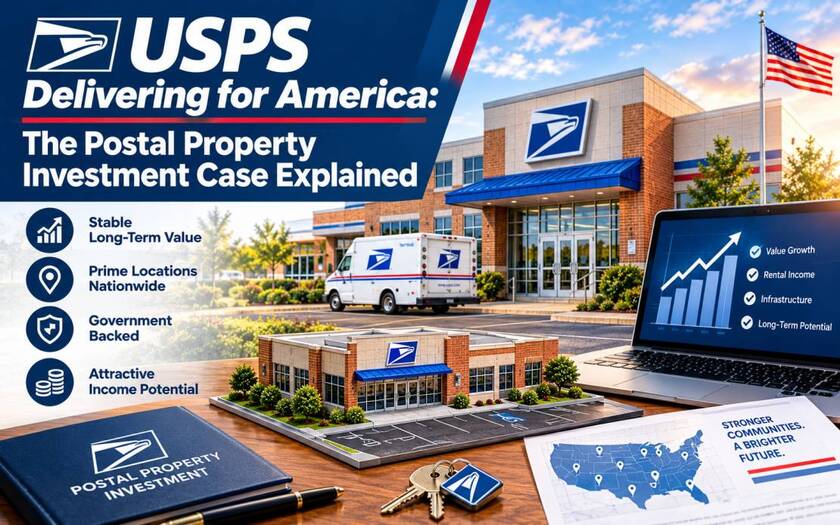
USPS Delivering for America: The Postal Property Investment Case Explained
USPS Delivering for America is transforming how the postal service operates. Here is what real estate investors need to know about this government-backed shift.

USPS Delivering for America has become one of the most consequential policy developments for income-focused real estate investors in recent years, yet most allocators have not fully examined what it means for their portfolios. At its core, USPS Delivering for America is a decade-long commitment by the federal postal service to modernize its facilities, expand its processing infrastructure, and restructure its delivery network to meet the demands of a parcel-driven economy. For real estate investors who understand that government capital commitments translate directly into property market signals, this agenda represents something worth studying carefully before the broader market catches up.

The investment case for USPS-leased real estate has historically rested on the credit quality of the federal tenant and the essential-service character of mail and parcel delivery. USPS Delivering for America adds a third dimension to that thesis: a publicly documented, forward-looking commitment to the physical infrastructure that underpins the entire asset class. Investors who have not yet incorporated this context into their underwriting process are evaluating postal properties with less than the full picture available to them.

Why Postal Properties Have Moved From a Niche to a Recognized Investment Category

The commercial real estate market has experienced meaningful rotation over the past several years, and income-focused capital has responded by moving toward assets with more defensible cash flow characteristics. Office vacancies remain structurally elevated in major metropolitan markets. Retail real estate continues absorbing the long-term consequences of shifting consumer behavior. Industrial assets, which attracted substantial institutional interest over the prior decade, have seen cap rate compression that has reduced their attractiveness for new capital deployment. In that environment, net-lease assets anchored by creditworthy, operationally stable government tenants have drawn sustained and growing attention from allocators who prioritize income durability.

USPS-leased facilities occupy a specific and well-defined position within that broader trend. The postal service operates under a federal mandate to deliver mail and packages to every address in the United States, a statutory obligation that does not respond to economic cycles, consumer sentiment shifts, or corporate earnings pressures the way private-sector tenant demand does. For investors who build portfolios around tenant credit quality as a primary underwriting variable, that statutory foundation carries practical weight that most other net-lease categories cannot replicate.

The growing visibility of this sector among institutional allocators has also improved the quality of information available to investors. Dedicated research, published transaction data, and exchange-listed vehicles with standardized financial reporting have collectively raised the level of transparency in a market that was once dominated by fragmented private ownership and inconsistent pricing benchmarks. That maturation has made postal properties more accessible and more legible for a broader range of sophisticated capital.

The Structural Characteristics That Make USPS-Leased Real Estate a Distinct Income Asset

Several features separate postal properties from conventional net-lease investments in ways that matter significantly to the underwriting process. The federal tenancy is the most fundamental distinction. The USPS does not carry private-sector balance sheet risk, and its operational continuity is backed by statute rather than corporate performance. That credit foundation is not replicated by most commercial tenants, even those with investment-grade ratings from major credit agencies, because statutory obligations exist independently of financial market conditions in a way that corporate covenants do not.

Last-mile delivery facilities represent the most operationally critical subset within the postal property category. These buildings are the physical endpoints of the domestic mail and parcel network, the locations where sorted deliveries transition into individual routes serving homes and businesses. As domestic parcel volumes have expanded alongside e-commerce growth, the logistical importance of these facilities has deepened. The growth of online retail has made last-mile postal infrastructure more central to the domestic supply chain rather than less, which provides a functional argument for long-term occupancy that reinforces the contractual protections within any individual lease.

Lease structures in this segment also tend to include renewal options and periodic rent escalations that extend income visibility beyond a single lease term. For institutional investors building yield-oriented portfolios with multi-year cash flow modeling requirements, that predictability is a structural advantage that many other real estate categories cannot offer with equivalent consistency. Taken together, the tenant profile, facility function, and lease design create an income asset that warrants serious consideration from any allocation framework built around stability and government-backed cash flow.

How the USPS Delivering for America Plan Provides a Framework for Smarter Underwriting

The actionable value of the usps delivering for america plan for real estate investors is not abstract. It provides a publicly available, government-authored document that speaks directly to which facility types the postal service is investing in, which operational functions it is expanding, and how its physical network is expected to evolve over the next decade. For investors evaluating specific postal property acquisitions, that level of detail creates a framework for distinguishing between assets with strong long-term occupancy characteristics and those that carry more meaningful renewal uncertainty.

Processing and distribution facilities aligned with expanded parcel handling capacity are among the facility types most directly supported by the investment priorities outlined in the usps delivering for america plan. Last-mile delivery offices serving high-volume population corridors represent another category where the modernization framework reinforces occupancy intent in ways that historical lease data alone cannot fully capture. Investors who apply this framework to specific acquisition targets are engaging in a more rigorous form of asset-level analysis than generic government tenancy arguments support on their own.

The inverse application of this framework is equally useful. Facilities that fall outside the operational priorities of the modernization agenda carry a different occupancy risk profile than those at its center. Investors who read the usps delivering for america plan as an active research tool rather than passive background context are doing the kind of granular underwriting that separates disciplined participants in this niche from those who are relying solely on the federal tenant label without understanding the facility-level distinctions that determine long-term income durability.

Postal Realty Trust and the Case for Exchange-Listed Exposure to This Thesis

For investors seeking transparent, liquid access to USPS-leased real estate, Postal Realty Trust (NYSE: PSTL) is the only publicly traded REIT built exclusively around this asset category. Established in May 2019,Postal Realty Trust has assembled a national portfolio of postal facilities spanning last-mile delivery offices, mail processing centers, and dedicated postal properties across all 50 states, with an acquisition strategy informed by deep institutional expertise in USPS lease structures and the facility-level implications of the federal modernization agenda.

The exchange-listed structure provides investors with liquidity and institutional-grade disclosure that direct postal property ownership cannot offer. Quarterly financial results are filed with the SEC, dividend history and tax information are publicly reported, and analyst coverage is available through the company’s investor relations platform. For financial advisors and institutional allocators evaluating alternative income allocations, that transparency significantly lowers the due diligence burden compared to assessing privately held postal property portfolios without standardized reporting infrastructure.

The sector purity of the vehicle is also a meaningful consideration for investors who want a clean, legible thesis without the dilution that comes from a diversified net-lease portfolio where postal properties represent a minor allocation. That clarity has practical value in portfolio construction conversations and in client communication contexts where the rationale for an allocation needs to stand on its own without qualification or complexity.

Risk Factors That Must Be Part of Every Serious Evaluation

A credible investment thesis requires a transparent accounting of where the genuine risks reside, and the postal property category carries several that investors should weigh carefully. The USPS retains statutory termination rights on its leases under certain conditions, a provision that differs materially from standard commercial net-lease termination language. Investors who assign terminal values to postal assets without reading the specific termination provisions in the applicable lease documents are accepting risk they have not fully priced, regardless of how compelling the broader federal tenant argument appears.

The long-term financial condition of the USPS also warrants ongoing monitoring. Legacy obligations related to retiree health benefit pre-funding have weighed on the agency’s balance sheet for many years, and while legislative reform has addressed portions of that burden, the agency’s financial profile remains a variable that long-term investors should track actively rather than assume away. The Delivering for America modernization agenda includes financial sustainability components, but multi-year institutional programs of this scale and complexity carry execution risk that responsible investors should incorporate into their analysis.

Portfolio concentration is a structural consideration as well. A real estate allocation anchored entirely to one federal tenant does not provide the diversification that broader commercial real estate allocations offer, regardless of that tenant’s credit quality. Postal properties are most appropriately sized as a yield-enhancing component within a diversified income strategy rather than as a primary or standalone position.

What Investors Who Take USPS Delivering for America Seriously Should Do Next

USPS Delivering for America has given the postal property investment thesis something that no amount of historical lease performance data could provide on its own: a forward-looking, government-authored commitment to the physical infrastructure that underlies the entire asset class. For income-focused investors who have been evaluating this sector from a distance, that commitment provides a concrete and publicly documented basis for engagement that is more durable than any single lease renewal or quarterly earnings report.

The structural qualities of USPS-leased real estate, including federal tenancy, essential-service mandate, long-term lease income visibility, and formal modernization backing, combine to form a thesis that is both coherent and grounded in verifiable government policy. The risks are real and must be underwritten with rigor. For allocators building portfolios around durable, government-supported income, however, USPS Delivering for America has made the case for this asset class more actionable than it has ever been before.

Investors who want to examine the full scope of this thesis, including strategic documentation, portfolio details, quarterly financial data, and analyst perspectives, can begin their research at postalrealtytrust

Read full Article
post photo preview
Automotive Electrical Diagnostics: The Complete Guide for Truck and SUV Owners in Hayward, CA
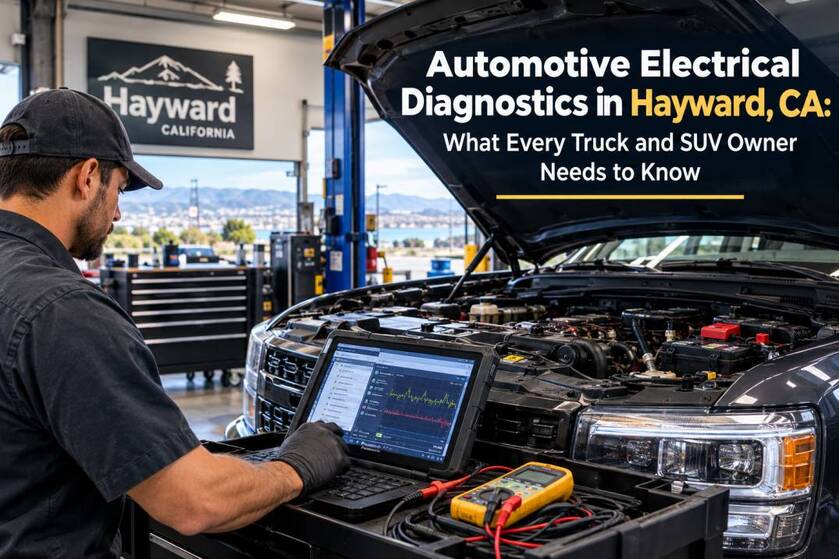
Automotive Electrical Diagnostics in Hayward, CA: What Every Truck and SUV Owner Needs to Know

Your check engine light has been on for five days. Your power windows respond slower than they should. Your audio system cuts out randomly at highway speed, and your truck takes a beat longer to start than it used to. None of these problems have sidelined you yet, but every single one of them is a signal that something inside your vehicle’s electrical system is not working correctly. For truck and SUV owners in Hayward, CA, ignoring these warning signs rarely ends well. Professional automotive electrical diagnostics is the process that identifies exactly what is wrong, where the fault is occurring, and why, before a manageable issue becomes a breakdown on the side of the road or a repair bill that proper diagnosis could have prevented entirely. Modern vehicles are built around complex electrical architectures where every system communicates with every other system through shared networks of wiring, sensors, and control modules. Chasing an electrical fault without professional diagnostic tools and genuine hands-on experience wastes time, misses the real problem, and frequently results in replacing parts that never needed replacing.

What Professional Automotive Electrical Diagnostics Actually Involves

Many drivers assume that automotive electrical diagnostics means plugging a code reader into the OBD port under the dashboard and reading whatever numbers come up on the screen. That step is where a professional diagnostic process begins, not where it ends. A thorough evaluation works through your vehicle’s electrical systems layer by layer, using specialized equipment and trained interpretation to identify faults that a visual inspection or a basic consumer-grade scanner will never surface. Understanding what the full process covers helps explain why professional diagnostics consistently produces results that guesswork and parts-swapping cannot.

OBD Scanning and Code Interpretation

Every vehicle built after 1996 stores fault codes in its onboard diagnostic system that record when a sensor reading, circuit condition, or system behavior falls outside the parameters the manufacturer defined. Reading those codes is the starting point, but experienced technicians treat them as leads rather than final answers. A code pointing to a mass airflow sensor fault might indicate a failing sensor, a wiring fault in the sensor circuit, an intake leak affecting the sensor’s readings, or a software issue inside the engine control module. Following the code to its actual root cause requires circuit testing and system evaluation beyond the code itself, and that deeper process is where professional automotive electrical diagnostics separates itself from basic code reading available at any auto parts store.

Voltage, Resistance, and Circuit Testing

Every electrical circuit in your vehicle operates within specific voltage, resistance, and current parameters that define correct function. Testing circuits against those parameters using a digital multimeter, a lab scope, or a current clamp identifies exactly where a circuit deviates from specification and why. A circuit with excessive resistance due to a corroded connector delivers less voltage to its connected component than it should, causing that component to underperform or behave erratically. A circuit with an intermittent open connection causes the component it feeds to cut out unpredictably, producing symptoms that are frustratingly difficult to reproduce consistently during a basic visual inspection. Systematic circuit testing finds these faults with a precision that no amount of visual examination can replicate.

The Most Common Automotive Electrical Diagnostics Findings in Trucks and SUVs

Certain electrical problems appear more frequently in trucks and SUVs than in standard passenger vehicles, partly because of how these vehicles are driven and partly because of the additional electrical loads that aftermarket accessories and overlanding builds place on factory systems over time. Recognizing the most common fault categories helps you identify developing problems early and get professional attention before they escalate into more serious failures.

Battery and Charging System Faults

A battery losing capacity and a charging system failing to maintain correct voltage are among the most common findings in automotive electrical diagnostics work on high-mileage trucks and SUVs. When battery voltage drops below the threshold that control modules require to operate correctly, the vehicle begins producing a wide range of seemingly unrelated symptoms. Warning lights illuminate for systems that are functioning normally, infotainment systems reset without warning, and transmission shift behavior changes because the transmission control module is not receiving stable supply voltage. A thorough battery and charging system evaluation that measures cold cranking amps, battery state of health, alternator output, and voltage drop across the charging circuit identifies these problems accurately and resolves confusion that parts-swapping never clears up.

Ground Connection Degradation

Ground connections are the return path for every electrical circuit in your vehicle, and degraded grounds are one of the most common and most frequently overlooked sources of difficult electrical faults. A ground connection that has developed resistance through corrosion, paint contamination, or physical loosening affects every circuit that shares that ground path. The symptoms appear across multiple unrelated systems and rarely point obviously toward a grounding issue, making this category of fault particularly difficult to diagnose without a systematic approach. Vehicles in the Bay Area that experience regular exposure to coastal moisture and temperature cycling are especially susceptible to ground connection degradation over time, and a comprehensive ground inspection belongs in every automotive electrical diagnostics process performed on a Bay Area truck or SUV.

Aftermarket Accessory Integration Conflicts

Every aftermarket accessory added to a vehicle introduces additional wiring, additional load on the electrical system, and new opportunities for installation errors that create conflicts with factory systems. A remote start system wired incorrectly can trigger persistent security system faults. A dash cam tapped into the wrong fuse circuit can cause other accessories sharing that circuit to lose power intermittently. An audio amplifier with a poor ground connection can introduce noise into multiple vehicle systems that share the same ground path. Professional automotive electrical diagnostics that evaluates aftermarket installation quality alongside factory system function identifies these conflicts accurately, which is why drivers who have had multiple aftermarket installations performed over the years benefit most from a comprehensive diagnostic evaluation.

Automotive Electrical Diagnostics for Overlanding Builds: Why It Matters Before You Build

For overlanders planning a serious vehicle build, professional automotive electrical diagnostics before installation begins is one of the most valuable investments in the entire project. Adding a dual battery system, solar charging setup, high-output lighting array, portable power station, and security system to a vehicle with pre-existing electrical weaknesses creates a build that underperforms from day one and produces layered faults that are difficult to untangle after the fact because new installations and pre-existing problems overlap in confusing ways.

Establishing Your Electrical Baseline

A pre-build diagnostic evaluation establishes the current health of your vehicle’s battery, charging system, wiring, and ground connections before any new components are added. If the alternator is showing early signs of overload stress, addressing it before adding a high-draw audio amplifier and auxiliary battery system prevents a premature failure that would otherwise occur on a remote trail with no support nearby. If the factory wiring shows signs of heat damage or insulation degradation, addressing it before routing new circuits through the same channels prevents future faults that would be extremely difficult to isolate after the build is complete and multiple new circuits have been added.

How Audio Mobile Hayward Integrates Diagnostics Into Every Build

The team at Audio Mobile Hayward on Mission Boulevard in Hayward, California treats automotive electrical diagnostics as a foundational part of every overlanding build consultation rather than a separate service that only applies when something is already broken. Before recommending specific components or planning installation sequences, their technicians assess the vehicle’s electrical condition to ensure the build is planned around a foundation that can genuinely support it. This approach consistently produces builds that perform reliably from the first trip rather than requiring troubleshooting and corrections after installation is complete. Drivers across the East Bay who have worked with the shop on complex builds consistently point to this diagnostic-first approach as the reason their installations work correctly from day one and continue working correctly on every trip after that.

Why Hayward and Bay Area Drivers Trust Audio Mobile Hayward for Automotive Electrical Diagnostics

Across Hayward, Fremont, Oakland, San Leandro, Union City, and the broader East Bay, truck and SUV owners dealing with electrical problems have found that working with a specialist who combines genuine diagnostic depth with extensive hands-on experience across aftermarket installations produces faster and more accurate results than a general repair shop. Automotive electrical diagnostics at Audio Mobile Hayward reflects years of working with complex vehicle electrical systems across car audio, vehicle security, GPS tracking, remote start, window tinting, and full overlanding builds, giving their diagnostic team a perspective on vehicle electrical problems that a standard repair shop simply cannot replicate. Their location at 24031 Mission Boulevard puts them at the center of the East Bay vehicle enthusiast community, and their reputation for accurate, efficient diagnosis has made them the first call for drivers across the region when electrical problems resist simple solutions. For Bay Area truck and SUV owners who need diagnostics backed by real expertise, reviewing the complete range of automotive electrical diagnostic and installation services available at Audio Mobile Hayward is the right starting point for getting accurate answers and repairs done correctly the first time.

Protecting Your Vehicle Starts With Knowing What Is Wrong

Professional automotive electrical diagnostics gives truck and SUV owners in Hayward and across the Bay Area the accurate, efficient path to resolving electrical problems that guesswork and parts-swapping consistently fail to deliver. From OBD scanning and circuit testing to ground inspection, charging system evaluation, and aftermarket installation conflict resolution, a thorough diagnostic process identifies the real source of every electrical symptom and guides the right repair the first time. For overlanders planning a build, pre-build diagnostics protects every dollar invested in accessories by ensuring the electrical foundation is solid before the first component goes in. If you are in Hayward or anywhere across the East Bay and dealing with an electrical problem you cannot resolve, Audio Mobile Hayward has the diagnostic tools, the technical depth, and the hands-on experience to find the answer and fix it right. Reach out today and get your vehicle’s electrical system working exactly the way it should.

Read full Article
Available on mobile and TV devices
google store google store app store app store
google store google store app tv store app tv store amazon store amazon store roku store roku store
Powered by Locals